life & times of the 18th C in North America
For their research, Western historians have often redefined the 18th century.
The “short” 18th century is often defined as the period from 1715 to 1789, marking the time from the death of Louis XIV of France to the beginning of the French Revolution, with a focus on events that are directly linked.
The “long” 18th century often spans from the Glorious Revolution of 1688, or, for some historians, the English Restoration, which takes the date as far back as 1660, up to the Battle of Waterloo in 1815 (specifically the Congress of Vienna or the Battle of Waterloo), or even later. Since my focus is on North America, I chose to extend it to early 1820, with the death of George III.
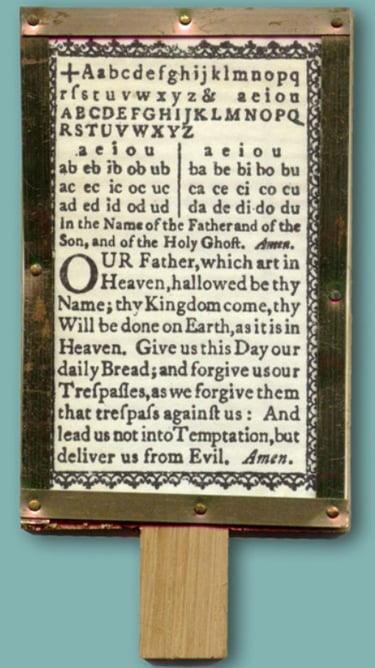
Although my interest lies in the 18th century as it relates to North America, my main focus is on the American Revolution (1765–1789). Although many consider the Revolution to have occurred from 1776 to 1783, I, like many historians, prefer to divide it. This division reflects the broader political movement and conflict, where 13 of the North American colonies challenged British rule, shifting from demanding rights to seeking full independence and replacing the old colonial system.
By 1775, there were many British colonies: New Hampshire, Massachusetts, Rhode Island, Connecticut, New York, New Jersey, Pennsylvania, Delaware, Maryland, Virginia, North Carolina, South Carolina, and Georgia are, for many, the most well-known, as these are the 13 colonies that rebelled and gained independence to form the United States. In North America, there were actually 26 British colonies. If we exclude the island colonies and territories in the Caribbean and stick to the mainland British colonies, there are 19 colonies (including the rebellious 13). The other six mainland colonies that did not join the rebellion were St. John’s Island, Newfoundland, Nova Scotia, Quebec, East Florida, and West Florida.
As a result of the war and its aftermath, St. John’s Island was later renamed Prince Edward Island. Québec was divided into Upper Canada (later Ontario) and Lower Canada (later renamed Québec). Nova Scotia was split into Nova Scotia, New Brunswick, and Cape Breton, though Cape Breton was eventually reattached to Nova Scotia. Eventually, the nation of Canada, as we know it today, was formed from these and other British North American colonies and territories. Many Canadian historians argue that the Revolution produced two countries: the USA and Canada.
So, for me, I generally regard 1765 to 1789 as the period of the American Revolution, with the War of Independence specifically spanning from 1776 to 1783, representing the actual armed conflict during the Revolution where the Continental Army, France, and Spain fought the British and her allies, including the Royal Provincials (British American troops loyal to the Crown) to secure the independence declared in 1776. The revolution was not just about well-known politicians, soldiers, sailors, and others; it involved all people. Depending on how you count them, at least two and a half million of them!
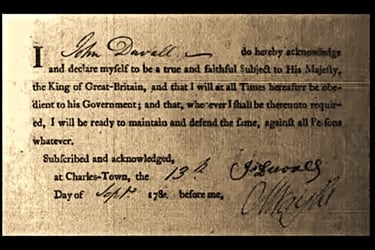






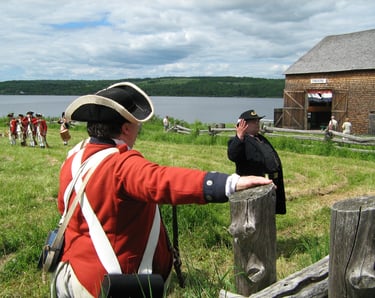
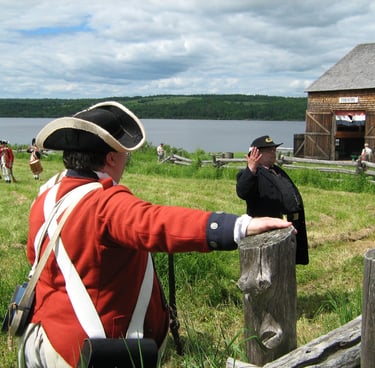
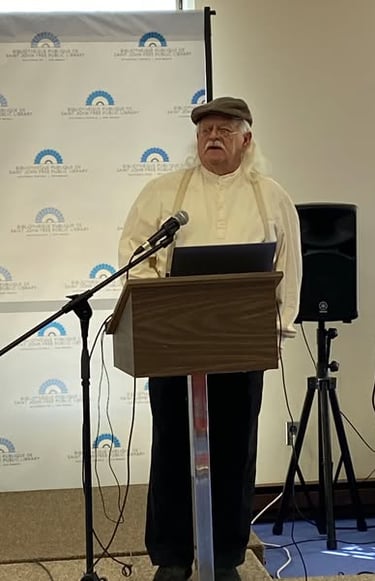
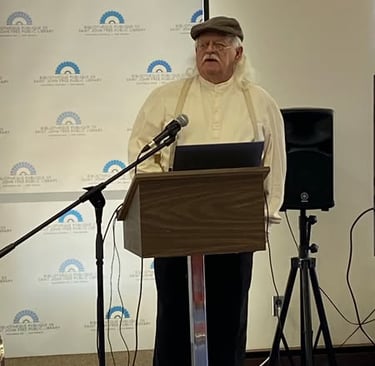
Presentations are available in different formats, on many subjects of the period, and in many settings, including luncheon meetings for different service groups, evening presentations at dinners, afternoon public presentations, and private group settings. Name your subject, and I will do my best to accommodate your request. There is usually no fee involved, but gas money is very useful and appreciated. Have PowerPoint, will travel! Use the email below.